Weshoot.com

The Official We Shoot Blog

  • Home
  • About
  • To Comment

Posts Tagged ‘commercial’

Going off, half-cocked!

Monday, June 24th, 2013

Sometimes it pays to do your homework.  Don’t just read the headlines.  Several times in the last few years, I have gotten some strange phone calls.  One day, late in the afternoon, I got a call on our business line.  A woman breathlessly asked, “How late are you open?”  I was somewhat taken aback by this, as we are basically location photographers who have a studio, but do most of our work outside of it.  We have used the studio for food and small product shooting, but our work is mostly on location: commercial, industrial, large product, and architectural.

So it was surprising to get a call like this, and I said to the person on the other end that we are open 24/7.  Whenever a client needs us, we are there.  Then the caller said, “Do you have an indoor range?”

I realized that this caller had only read our headline on a search engine, and typed in “Shooting Range” for their search.  In the headline, a lot of times, our phone number comes up.  So, instead of clicking on the link to get more information, they call our number.

I told the caller that the name of our business is We Shoot, that we are commercial photographers – the only things we shoot are cameras – and that our website is weshoot.com.  She sounded a little sheepish and apologized for calling.  And, she still hadn’t found a shooting range, which I assumed she was in a hurry to find.

In like respect, when choosing a commercial photographer for a project, see if they are what you are looking for.  Many photographers who specialize in weddings also advertise for other types of work.  Now, this is not to say that wedding photographers can’t do commercial work, but if you go to their website and the first images you see are wedding related or portraiture heavy, this is what comprises the bulk of their work.   You won’t find weddings or portraits on our website.  Just because we all use cameras doesn’t make us all the same.  So, choose wisely for the type of photography you need – it can save you time and money in the long run.  Then you won’t be going off, half-cocked!

– Gary Silverstein

We Shoot

Tags: architectural, architecture, commercial, industrial, photography, product, We Shoot Photography, weshoot.com
Posted in Information | Comments Off on Going off, half-cocked!

Bracketing with Studio Strobes . . .

Friday, February 15th, 2013

Product and other forms of commercial photography sometimes require the use of strobes.  Strobes usually provide daylight color balance which helps with architectural photography as it allows a burst of light to light up a room, and use a time exposure to get the (daylight) scene outside a window so it looks like we see it.  Otherwise, the sunlit exterior is blown out, or in some instances, it can look darker and drearier than the interior, if it is overcast outside.  In the case of product, studio strobes are the powerful cousins of your on-camera strobes, and offer many advantages over the smaller units.

First, studio strobes are usually way more powerful, as they use very large batteries, 110v inverters, or wall socket power.  Second, they are portable and don’t have to be mounted on the camera, and give a more pleasing look as they don’t “flat-light” the subject and can be made to mitigate heavy shadows.  They are designed to work with many different accessories from umbrellas to soft boxes.  They can use many different types of wireless triggers.  They can generate more than enough light to shoot at tight apertures, allowing for deep depth of field.  In product and architecture, I find that shooting with small apertures (f11 to f16) allows me to get everything sharp and in focus.  If it is sharp in my original image, I can always create a shallow depth of field look in photo-editing software.  However, the reverse is not true.  Really soft images cannot be brought back into sharp focus even with the best of software.

All of the studio strobes I have used work with totally manual settings.  I usually set my camera on a tripod at f11 to f16 at 1/100th of a second or slower.  The strobe light burst lasts for a very short time.  This eliminates most movement, but how do I bracket under those conditions, since I don’t want to change either the shutter speed or aperture once I start shooting?  The answer is in the manual controls of the studio strobes.  Once I get my best-looking exposure of all elements by shooting and rechecking the image, I plan on shooting a series of images bracketed on either side of that exposure by working the slides or dials on my equipment, usually in half-stop increments.  I may be using as many as 3 or 4 lights at different angles, and each will need to be adjusted individually for each exposure.  This gives me the same object at the same depth of field at the same shutter speed from a dark exposure to an overblown exposure.  Why would I want to do this?  I can then pick and choose the best exposed parts of the object or room and using an editing program, such as Adobe Photoshop, I assemble them to make a perfectly exposed object with detail where it needs to be without any noise.  I can also make an HDR image from all the exposures, if that gets me a better-looking image.

Being a commercial photographer means getting the best satisfactory image for your client.  A commercial photographer having the right equipment and expertise means leaving very little to chance.

– Gary Silverstein

We Shoot

We Shoot is a commercial product, food, industrial, and architectural photography team based in the Seattle area.
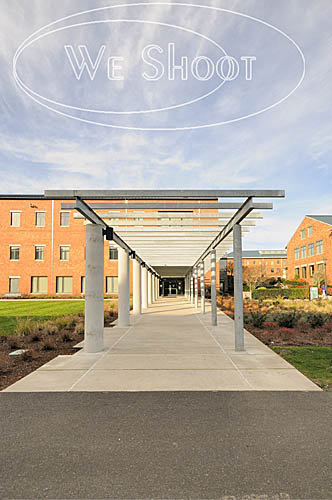
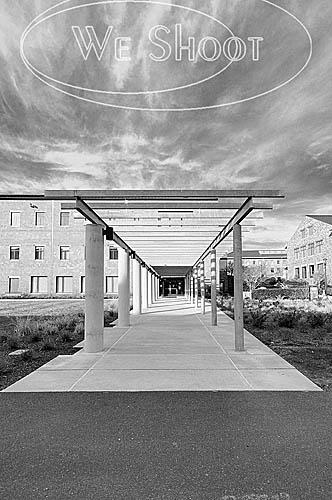
Tags: architectural, bracketing, commercial, edit, flash, flat-light, flat-lit, food, hdr, industrial, lighting, off-camera, on-camera, photography, Photoshop, product, shadow, software, strobes, studio strobes
Posted in How To, Learning, Tips | Comments Off on Bracketing with Studio Strobes . . .

Expanding your capabilities . . .

Saturday, September 17th, 2011

Here’s one of our promo videos!


All professional photographers should strive to increase their capabilities.  One of the ways is to embrace video.  A lot of wedding photographers have done this as this gives them more ways of generating capital.  Being versatile is very important.  But there are costs for doing this.  Let’s talk about video and where it figures in. 

In the film days, a professional photographer could buy 2¼” medium-format cameras to do weddings and portraits, or a 4″X5″ (or bigger) large format camera to photograph architecture and products.  This was a huge barrier to entry to amateurs, with the huge cost and learning how to work with what were mostly manual systems.  Unless an amateur or student was particularly well-heeled, he couldn’t purchase this equipment.  He would have to work with the less expensive smaller format 35mm cameras, that were also more expensive when moving up to the high end.  A budding pro would have to work his way up, sometimes working as an assistant for an established pro.

In the past, architectural clients wouldn’t hire someone who couldn’t give them large-format transparencies or negatives.  It shut out a good many photographers.  It was a barrier to entry.

Then digital still photography became the norm and the cameras evolved into something very capable of producing a very large and sharp print.  And the price started dropping.  The barrier to entry was being lowered.  And digital had another perk.  Editing software came into its own.  The one with the highest regard is Adobe Photoshop.  It is not cheap for the current version.  But there are some lower-cost alternatives that don’t do as much.  A barrier just fell again.  More amateurs call themselves pros.  Now, the competition is very heavy.  It is hard for the clients to tell who can do the work or not.  The Internet is awash with images.  Some may steal an image and say it is theirs.  Others shoot all the standard stuff photographers take as a hobby.  Flowers, landscapes, people, boats, cars, etc.

A commercial photographer does more with the images he creates.  You wouldn’t hire someone to shoot your company’s expensive product to show it in its best light, if the photographer only showed you a portfolio of beautiful sunsets, would you?

You would want to know that the photographer could get great detail and sharp, clear, well-lit images of products as seen in his/her portfolio.

Since we already have extensive experience at commercial photography, we add video to the mix to increase our versatility and do more for our clients.

Video is a whole different animal than still photography.  You have all the things that a still photographer has to think about, plus movement and sound to deal with.  And editing videos is more complicated than it has ever been as there are more tools to work with. While a lot of video cameras will do a great job of recording what is in front of them with just the press of a button, editing them is way more than trimming a clip and placing it on the end of another clip.  And, everyone watches TV.  If you want to see what is possible, look at the intro to CSI Miami.  It is a mixture of stills, video clips, and moving graphics. It probably took months to put together and it is over in less than a minute.  HD video files are huge.  A one-minute HD video in QuickTime format is around a gigabyte in size.  You need a computer with some real horsepower to harness the expensive software that it takes to get something really professional.  Rendering time can run many hours.  Adobe Premiere Pro, After Effects, Photoshop Extended, and a legion of other programs come into play.  And the learning curve is steep.  High costs, a lot to learn . . .  Now, there is a barrier to entry. 

If you haven’t already, take a look at our video at the top of this post.  As you can see, it adds a dynamic dimension to our professional commercial portfolio. It is a great way to show off our portfolio and for a client company  to promote itself, as well.

– Gary Silverstein

Tags: barrier to entry, commercial, http://weshoot.com, photograph, photographer, professional, promo, promotional, still photography, value added, versatile, versatility, video, video editing, videographer
Posted in Learning, Marketing, Tips | Comments Off on Expanding your capabilities . . .

We Shoot Blog Kickoff – about black and white photographs

Monday, June 14th, 2010

Color image    Black and white image

Today, very few people are using film to create their images, and commercial photographers were early adopters of digital photographic equipment.  I was one of the early ones.  So, I was faced with the question: How does one make a black and white image with a digital camera?  I can’t speak for all cameras, of course, as there are so many different ones.  Some cameras have a facility built in to take a b/w photograph.  We have an older point and shoot camera that doesn’t seem to have that capability.  It also shoots only jpegs.

Our DSLRs, or digital single lens reflex cameras, on the other hand, are able to shoot in a b/w mode.  Here are some caveats.  When shooting a jpeg image in b/w mode, the effect is permanent – I am unable to find a way to reverse the format once the image has been taken and it is black and white, should I desire the image in color.  We have Nikon DSLRs (this is our choice, and not an indictment of other brands), and they are also capable of shooting a “Raw Image.”  Raw is usually a non-destructive format, meaning that changes to the image can be deleted and the image returned to the state in which it was taken.  Raw is usually the choice of professionals, as there is more digital information left intact in the image, like color and density, than there is in a tiff or jpeg.  Raw images can be manipulated by computer software a lot more than the aforementioned tiff or jpeg, and a raw image can be converted to other formats after manipulation.  Here’s where there is an advantage to shooting raw:  even if the camera is in b/w mode, I can again get a color image from the raw format.  It seems the b/w mode is a filter in the camera, and if using the Nikon Capture NX2 software, it shows the image as a black and white, but the filter can be removed by the software.  Other software, like Photoshop CS4 doesn’t even see the black and white filter, and shows the raw image as one with the original color!  If taking a jpeg image with the same camera, the b/w effect is permanent!

We have a client, an advertising firm,  who wants all the image samples we show them and the images they order in black and white, gray-scale.  This is a lot of work, but it has its rewards.  We have gotten great expertise in doing this, and we have a lot of images that can later be used in color or black and white for other things, as well as stock.  These images are non-proprietary, meaning they aren’t of the client’s product, property, or personnel.  They are images from the world around us, and are used in an editorial way

So, what is our workflow for this client?  First, we shoot the images with a high-resolution digital camera, in color.  Then we process them in the Nikon raw editor, Capture NX2.  We tweak the color and density in this program and convert them to color tiffs.  Next, we open the tiffs in Photoshop CS4 where we further process them, removing flaws, lightening and darkening specific areas on the image.  Now, there are several ways to make a black and white image from color.  We prefer using the black and white adjustment layers in CS4.  It gives us a lot of ways to manipulate the image for contrast, density, and even filters the image like it was shot with a filter on the camera lens.  Want a dark or black sky with white clouds?  There are filters for that! (There’s an app for that!:-) ).  After getting what I want in the look of the image, I convert the image to a gray-scale tiff.  After I am done with the multitude of images I have created in this manner, I use Photoshop to batch the images to low-resolution jpegs, and put our copyright and/or logo on the sample images. This keeps unlicensed use from happening.

Next, I make a zip file out of all the sample images, and send them on to our client over the Internet, so they can choose which of the images they would like for their purposes.  Once they let me know what they want, I can either put them in a zip file and send it to them over the ‘net, or burn them to a DVD and send them via carrier.

That is just how we deal with one client.  Black and white photographs are abstract, different, and fun.  They are also a lot of satisfying work.

– Gary Silverstein

Tags: b/w, black and white, commercial, photographer, photography, professional
Posted in Tips | Comments Off on We Shoot Blog Kickoff – about black and white photographs

Next >>

  • Categories

    • How To (21)
    • Information (548)
    • Learning (30)
    • Lighting (179)
    • Marketing (291)
    • Photographs, Images (545)
    • Tips (38)
    • Uncategorized (2)
    • video (13)
  • Archives

    • September 2025
    • June 2025
    • May 2025
    • April 2025
    • January 2025
    • December 2024
    • November 2024
    • September 2024
    • August 2024
    • July 2024
    • June 2024
    • May 2024
    • April 2024
    • March 2024
    • February 2024
    • December 2023
    • November 2023
    • October 2023
    • September 2023
    • August 2023
    • July 2023
    • May 2023
    • February 2023
    • January 2023
    • October 2022
    • September 2022
    • August 2022
    • July 2022
    • March 2022
    • February 2022
    • January 2022
    • December 2021
    • July 2021
    • June 2021
    • May 2021
    • April 2021
    • March 2021
    • February 2021
    • January 2021
    • December 2020
    • November 2020
    • October 2020
    • September 2020
    • August 2020
    • July 2020
    • June 2020
    • May 2020
    • April 2020
    • March 2020
    • February 2020
    • January 2020
    • December 2019
    • November 2019
    • October 2019
    • September 2019
    • August 2019
    • July 2019
    • June 2019
    • May 2019
    • April 2019
    • March 2019
    • February 2019
    • January 2019
    • December 2018
    • November 2018
    • October 2018
    • September 2018
    • August 2018
    • July 2018
    • June 2018
    • May 2018
    • April 2018
    • March 2018
    • February 2018
    • January 2018
    • December 2017
    • November 2017
    • October 2017
    • September 2017
    • August 2017
    • July 2017
    • June 2017
    • May 2017
    • April 2017
    • March 2017
    • February 2017
    • January 2017
    • December 2016
    • November 2016
    • October 2016
    • September 2016
    • August 2016
    • July 2016
    • June 2016
    • May 2016
    • April 2016
    • March 2016
    • February 2016
    • January 2016
    • December 2015
    • November 2015
    • October 2015
    • September 2015
    • August 2015
    • July 2015
    • June 2015
    • May 2015
    • July 2014
    • June 2014
    • May 2014
    • September 2013
    • June 2013
    • March 2013
    • February 2013
    • January 2013
    • December 2012
    • October 2012
    • July 2012
    • June 2012
    • May 2012
    • March 2012
    • February 2012
    • December 2011
    • September 2011
    • August 2011
    • July 2011
    • March 2011
    • December 2010
    • October 2010
    • September 2010
    • July 2010
    • June 2010
  • Meta

    • Log in
    • Entries RSS
    • Comments RSS
    • WordPress.org

Copyright © 2026 - weshoot.com | Entries (RSS) | Comments (RSS)

WordPress theme designed by web design